"Corporate bigwigs often complain about government spending, criticizing bureaucrats who they say spend taxpayers’ money differently from how they would if it were their own. But sometimes the financial behavior of executives will also vary based on whose wallet is getting depleted. Here’s an illustrative tale from my days at Salomon. In the 1980s the company had a barber, Jimmy by name, who came in weekly to give free haircuts to the top brass. A manicurist was also on tap. Then, because of a cost-cutting drive, patrons were told to pay their own way. One top executive (not the CEO) who had previously visited Jimmy weekly went immediately to a once-every-three-weeks schedule."
Showing posts with label CEO. Show all posts
Showing posts with label CEO. Show all posts
Monday, March 05, 2007
Chairman's Letter 2006 3


Thursday, December 21, 2006
The Warren Buffett CEO 27: Harrold Melton
 “Honesty and integrity should govern all your business decisions.”
Wednesday, December 20, 2006
The Warren Buffett CEO 26: Jeff Comment

 “Be a role model for your employees and your customers.”
 “Be passionate about your business.”
“Stick to your core strengths and your business will flourish.”
Thursday, October 19, 2006
Wednesday, October 18, 2006
The Warren Buffett CEO 24: Ralph Schey III
 “The way you communicate with your employees is crucial. You should talk with them and hear their concerns rather than simply being a manager who tells them what to do. You want to inspire them so they want to accomplish something.”
“Entrepreneurial spirit is powerful. Even in large companies, you should let managers have some degree of ownership so, like entrepreneurs, they can develop and grow their parts of business.”
Tuesday, October 17, 2006
The Warren Buffett CEO 23: Ralph Schey II

Ralph Schey says that he measures his success by “the people who I’ve inspired to do something that makes them successful. And when somebody recognizes what I did to mentor them, to get them to do something that they may not have done, and they come back and say, ‘I appreciate it,’ I feel very good about that.”
“What drives an entrepreneur is to be in control of his destiny, and to do something better than anyone else can do it….The entrepreneurial opportunity is more than just making money and creating user satisfaction with a superior product of superior value. Opportunity is manifested in changing people’s lives and envisioned.”
Monday, October 16, 2006
The Warren Buffett CEO 22: Ralph Schey I
 “When we were a public company, of the roughly 200 working days a year, we probably spent at least 50 of them outside of the company, talking to public relations people, investor relations people, investment people, and others like that. We don’t do that anymore, so we have more time to concentrate on growing the business.”
 Warren Buffett when talk about Ralph Schey says, “The reasons for Ralph’s success are not complicated. Ben Graham taught me 45 years ago that in investing it is not necessary to do extraordinary things to get extraordinary results. In later life, I have been surprised to find that this statement holds true in business management as well. What a manager must do is handle the basics well and not get diverted. That’s precisely Ralph’s formula. He establishes the right goals and never forgets what he set out to do. On the personal side, Ralph is a joy to work with. He’s forthright about problems and is self-confident without being self-important.”
Saturday, October 14, 2006
The Warren Buffett CEO 21: Chuck Huggins

 “Mandatory retirement is not a policy I endorse. As long as someone is healthy and interested in working, he or she should stay on the job. The intelligence and experience of older people can be a tremendous asset.”
 “Pleasing the customer, no matter how ridiculous the issue, is important. When customers can count on something being the same over an extended period of time, they’re going to keep coming back to you.”
Friday, October 13, 2006
The Warren Buffett CEO 20: Stan Lipsey
“Sometimes the smartest decision you can make is to do nothing. I don’t like being pioneer, and I won’t be one unless I see an opportunity where the first guy is going to benefit, and I watch that very closely.”
“Trust your managers and give them autonomy. My managers run their departments so effectively that we don’t have to set budgets.”
Sunday, October 08, 2006
The Warren Buffett CEO 19: Eliot and Barry Tatelman II

“We want to be the best, not the largest. That’s the most important thing. We’re not trying to own the world. I think the challenge for us is to do things in a different way than the people and see smiling faces on our employees and smiling faces on our customers.”
The way Eliot measures the company success—“with smiles. And, if that’s your motivation rather than just bottom line, then the bottom line comes anyway. It really does.”
Friday, October 06, 2006
The Warren Buffett CEO 18: Eliot and Barry Tatelman I

“There’s more than one way to skin a cat. You always think the way you do something is the best or the right way, but when we sat down and discussed how we all did things, we found out that even though other people might do things differently it can still be very successful.”
“Our biggest competitor right now is probably not in the furniture business, it’s companies that produce all kinds of consumer products.”
Thursday, October 05, 2006
The Warren Buffett CEO 17: Melvyn Wolff

 “Growth to come from inside the company rather than through acquisitions.”
 “One thing you don’t transport is culture. …..I wouldn’t want to tackle buying them and trying to convert their culture to ours. I would rather grow it internally and not have to make changes in someone else’s company.”
“As soon as you give up the customer to someone else, you give up control over the sale and over the after-sale service….if something doesn’t run perfectly, we have no one to blame but ourselves.”
“Be open to new ideas, but don’t abandon the learnings gained by experience.”
Wednesday, October 04, 2006
The Warren Buffett CEO 16: Bill Child

“Integrity must be constant, in good times as well as bad. We must be honest and trustworthy with our employees, our customers, our suppliers and ourselves.”
“Provide more than what a customer expects. Added service or value is what keeps customers loyal.”
“Looking at the financials is important, but sometimes you have to go with your instincts when you’re making a business decision.”

Tuesday, October 03, 2006
The Warren Buffett CEO 15: Frank Rooney

“Not delegating is the single most common cause of business failures.”
“A number of key managers are paid a minimal four-figure annual salary, to which is added percentage of the company’s profits.”
“Management should keep simple.”
Monday, October 02, 2006
The Warren Buffett CEO 14: Irvin Blumkin
 “First of all, knowing the business, and knowing what you know and what you don’t know. Second is working at a circle of competence and understanding it. And third is knowing what makes the business work.”
Errors that Blumkin thinks that lead to business failure are: “Becoming too big too fast, losing focus on what you do best, divesting from your core competency, and being overleveraged.”
Saturday, September 30, 2006

Thursday, September 28, 2006
The Warren Buffett CEO 12: Rich Santulli III

Perhaps unconsciously following Andrew Carnegie’s dictate that “He who dies rich, dies disgraced,” Santulli says, “Everything that I have will be given away while I am alive, minus enough for my wife to live.”
Note: Rich Santulli set up a family foundation, RTS Family Foundation where he spends his time in charity works.
Wednesday, September 27, 2006
The Warren Buffett CEO 11: Rich Santulli II
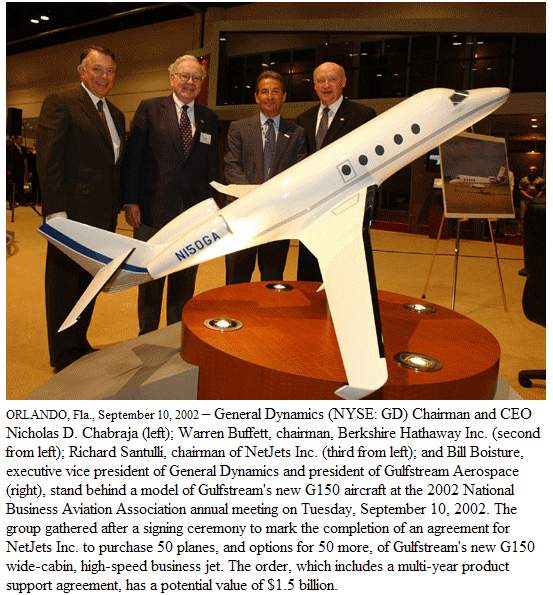
“My circle of competence is that I understand business very well. I understand people very well. I understand the aviation business. I don’t know how to make an airplane and I don’t know how to fly an airplane, but I know what customers—people—like in airplanes. I know that. And I know how to take that and turn it into something that works from an economic point of view.”
“Hire the best people and don’t be afraid they’re going to take over your job. After they show their abilities, empower them and delegate. You have to look long term, and hiring the best employee is one way to ensure your future success.”
Tuesday, September 26, 2006
The Warren Buffett CEO 10: Rich Santulli I
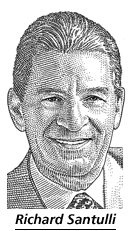 “Because people who buy companies usually have huge egos and think they’re smarter than the people they bought the company from, One of the nicest things about being part of Berkshire is that if I said to Warren, ‘I am going to go buy $1 billion worth of airplanes,’ he would say, ‘Why are you asking me? Go do it.’”
 “You have to love your business. You have to care about your people. You have to treat them with dignity and respect. And you have to communicate well with your people to let them know what is going on.”
Monday, September 25, 2006
The Warren Buffett CEO 9: Interview with an author, Robert P. Miles III
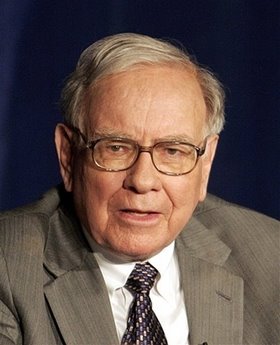 “Charlie Munger was right when he said that the top 25 managers at Berkshire could all die at once and Berkshire would continue successfully. Berkshire by its very culture and structure is deeper than any other conglomerate because it doesn't exist with just one CEO. Berkshire is a holding company of CEOs all operating independently of one another. Unlike every other traditional corporation, none of the CEOs has a term limit. All the Buffett CEOs have designated a successor.”
Subscribe to:
Posts (Atom)