While the example mentioned is just a simple mathematic calculation, it does not take considerations into the complexity of real estate as a business nature.
The price we are paying for a house is just a beginning of other underlying cost that followed. Take an instance, legal fee, stamp duty, loan processing fee, management fee are few examples. How to find people to rent out the house? Will they pay the rental promptly? Are they a good tenant? If a current tenant left the house, how short a laggard period? Will the interest rate maintain the same throughout the period of financing? What happen if the price of the house depreciates instead of appreciation? There are too many questions that lie after you sign on the Sale and Purchase Agreement. It’s simple to drop a signatory on the S&P Agreement, but there are too many headaches afterwards. There are too many uncertainties that beyond our control: when the interest rate will be increase? Does the price of the house appreciate over the time? We do not know whether the tenant will default their rental payment or not? The uncertainties could be infinite.
Uncertainty actually is the friend of the buyer of long-term values, only when you are buying an investment that creates a long term value.
Remember: “Price is what you pay, Value is what you get.”
Showing posts with label LBO. Show all posts
Showing posts with label LBO. Show all posts
Tuesday, February 07, 2006


LBO II
When people pouring their money into real estate on the hope that price of their real estate investment will appreciate and at the same time hoping for positive cash flow coming from the rental income. While these hopes lie on prayer “Dream comes true”, it only indicates that the investors are innocent or naïve.
When making any investment, it’s only the best investment when it’s most business-like and vice versa. Thus, when putting in business sense on real estate investment, it sounds like a terrible investment. The reasons? When you make an investment on real estate, normally the up front deposit is 10% of the purchase price or less. This will immediately translate to the fact that the investment you made is based on gearing of 0.9x (meaning that you are using $1 to buy $10 product). This will put your situation very dangerous. While people always brainwashed with “Power of Leverage”, what they don’t told is there is also “Destructive Power of Leverage”. When you use $1 to buy $10 product, it is a good investment when this product price appreciates, say 10%, thus your new price of the product is $110 now. This means by invest only $1, it gives you not only 10% return, but 1,000% return!! ( ($110-$100)/($1)* 100%). But, what happen if the case is reversed, that’s your new price of the product you bought drop 10% of the original price? Let us figure it out: ( ($90-$100)/($1) * 100%) = -1,000%, that’s negative 1,000% return!!
Leveraged Buyout (LBO) I
Leveraged Buyouts, that's buyouts financed by debt became the rage during late 70s and in the 80s. Much of this, was due to “The King of Junk Bond”, Michael Milken.
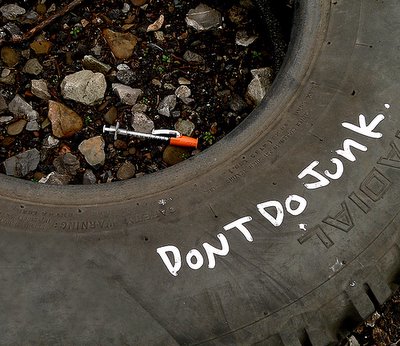
Milken, in the 70s had theorized that junk bonds (kind of bonds that were issued by distressed companies with low credit quality) often traded at excessive discounts. He thought those bonds offered high enough interest rates to more than compensate investors for the risk of default. By floating a low credit quality bonds to the market, the borrowers used the money for various purposes, such as internal expansion, fund a war for acquisitions or simply to pay off prior debts. For instance, Ronald Perelman, an ambitious deal maker managed to buy his first business, a jewelry distributor, with precisely $ 1.9 million in borrowed funds. After meeting with Milken, Perelman could borrow not millions but billions to launch a bid for the cosmetic giant, Revlon. People might wonder where’s the money come from? The lure, was the high interest rate – 12%, 14% or more, something that junk-bond issuers promised. While it might give people who buy this kind of junk-bonds a potential high return, people forget that the promise to pay such high return rate relied on the companies that were on the verge of bankruptcy. When the promise could not kept, this kind of investment inevitably doomed to fail.
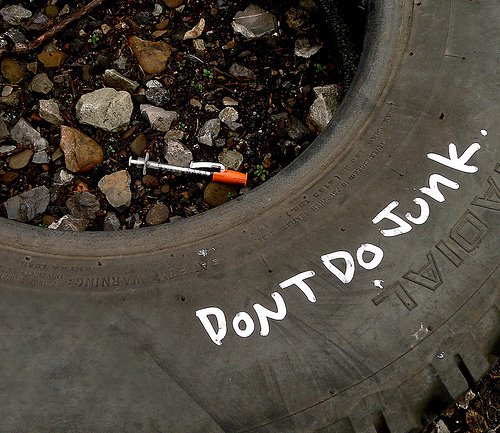
Milken, in the 70s had theorized that junk bonds (kind of bonds that were issued by distressed companies with low credit quality) often traded at excessive discounts. He thought those bonds offered high enough interest rates to more than compensate investors for the risk of default. By floating a low credit quality bonds to the market, the borrowers used the money for various purposes, such as internal expansion, fund a war for acquisitions or simply to pay off prior debts. For instance, Ronald Perelman, an ambitious deal maker managed to buy his first business, a jewelry distributor, with precisely $ 1.9 million in borrowed funds. After meeting with Milken, Perelman could borrow not millions but billions to launch a bid for the cosmetic giant, Revlon. People might wonder where’s the money come from? The lure, was the high interest rate – 12%, 14% or more, something that junk-bond issuers promised. While it might give people who buy this kind of junk-bonds a potential high return, people forget that the promise to pay such high return rate relied on the companies that were on the verge of bankruptcy. When the promise could not kept, this kind of investment inevitably doomed to fail.
Subscribe to:
Posts (Atom)