Excerpts from Turtles in Omaha by Michael J. Mauboussin, Chief Investment Strategist, Legg Mason Capital Management. Click here to view more.
The Mindset of Great Investors
The difference in [investment] return had nothing to do with knowledge and everything
to do with emotional and psychological factors. We had all been taught the same thing,
but my return . . . was three times that of the others. Over the years, I kept finding
evidence that emotional and psychological strength are the most important ingredients
in successful trading.
-- Curtis M. Faith, "Way of the Turtle"
Nassim Taleb’s latest book, The Black Swan, is a treatise on the improbable events Buffett has in mind. 5 The term black swan comes from philosopher Karl Popper’s criticism of induction: We get closer to truth if we focus on falsification instead of verification. Seeing lots of white swans
(verification) does not allow for the statement “all swans are white,” but seeing one black swan
(falsification) does disprove the statement. This is relevant in investing because investment
strategies based on the reoccurrence of white swans can be toppled by one black swan event.
Taleb suggests all black swans have three attributes: they are outliers, they have an extreme
impact, and people seek to explain them after the fact.
Three High Hurdles
Here are three psychologically-difficult barriers great traders and investors must overcome: loss aversion, frequency versus magnitude, and the role of randomness. How individuals cope with these barriers provides good insight into their investing temperament.
Loss aversion. In what is now a well-documented and well-known phenomenon, humans suffer roughly twice as much from losses as they receive pleasure from comparable gains. An important consequence is investors will turn down positive expected-value financial propositions, especially when their recent results have been poor.
Faith provides a powerful example of this point. Following the expiration of the confidentiality
agreement he signed, Faith explained the turtle system to a friend. Noting that cocoa presented a great trading opportunity in 1998 through early 1999, he inquired how his friend was doing in
cocoa. The friend replied he stopped trading cocoa because he had lost money and thought the
trade was “too risky.”
Then Faith explains the circumstances. Following the system would have generated 28 total
trades (average size $10,000 – $15,000) from April 1998 through February 1999, producing a
total profit of nearly $56,000. But of the 28 trades, 24 were unprofitable (average loss of about
$930) while 4 were profitable (average gain of roughly $20,000). Even more difficult, the first 17 trades in a row lost money.
Given this profit pattern, it is not difficult to see why a trader would abandon the commodity and perceive it as overly risky. But Faith’s point is crucial: Recency bias and loss aversion often cause you to give up right before the trade becomes profitable. Sticking with positive expectation financial propositions is essential to maximizing profits over time.
Frequency versus magnitude. This concept is really an extension of loss aversion. Most of us frame the success or failure of a financial proposition in terms of the price. For instance, if you buy a stock at $30, any price above that level is mentally successful; any price below it is
mentally unsuccessful.
What investors often fail to consider is that change in wealth is not a function of how often you’re right, it’s a function of how much money you make when you’re right versus how much you lose when you’re wrong. You need to consider both frequency and magnitude to understand investment results.
Faith illustrates this point by sharing 20 years of results for a trading system. Over that time span, the system generated about 5,600 trades, or around 250 a year. Of those trades, a shade over two-thirds lost money, making the success ratio less than one-third. But the winning trades
earned 2.2 times the losing trades on average, netting a substantial overall profit.
As with loss aversion, operating according to the frequency-and-magnitude maxim is easier said
than done. Faith notes, “Some of the Turtles had a hard time with this concept; they felt the need to be right and to predict markets.”
The expected-value mindset has served many well-known investors well. One example is George Soros. Former colleague Scott Bessent said in a recent interview, “George has a terrible batting
average—it’s below 50 percent and possibly even below 30 percent—but when he wins it’s a
grand slam. He’s like Babe Ruth in that respect.”
Role of randomness. Most people agree stock prices move more dramatically than business
values move. In the stock market, like most probabilistic systems, there is a great deal of noise in the system. However, most investors fail to recognize the degree to which randomness affects
short-term results. And, as bad, many investors have emotional reactions to short-term
randomness that undermine the quality of their decision making.
This is Faith’s comment; the idea applies to nearly everyone involved with markets: 16
Most traders do not understand the degree to which completely random chance can
affect their trading results. The typical investor understands this even less than the typical
trader does. Even very experienced investors such as those who operate and make
decisions for pension funds and hedge funds generally do not understand the extent of
this effect.
Here’s the point: A trader, or investor, can put on a positive expectation bet (correct process) and still have poor results (outcome) for some period of time due solely to randomness. But many investors attribute bad outcomes to bad processes, which leads to substantial error. As insidious is attributing good outcomes to a good process. A thoughtful investor must carefully consider process and recognize long-term outcomes will follow.
Here are some data to substantiate the point. The first is a study by The Brandes Institute called “Death, Taxes, and Short-Term Underperformance.” 18 The researchers screened for largecapitalization, actively-managed funds that had a 10-year track record through 2006. This yielded 591 funds. They then ranked the funds by decile based on annualized gains.
The top-decile group had returns in excess of 10.9 percent, and all of them delivered better
returns than the S&P 500 index. The researchers posed two questions: Did these funds have
periods of relative underperformance? If so, by how much?
The answer to the first question is a resounding yes. In fact, all 59 of the funds in the top decile
underperformed for at least one year. In its worst one-year period, the average top-decile fund
underperformed the index by 1,950 basis points, with a range of negative 650 to 4,410 basis
points.
Over a three-year period, the average underperformance was still 810 basis points, with a range
of positive 250 to negative 2,240 basis points. The one- and three-year numbers of these good long-term funds clearly show the limitations of relying on short-term results to decipher the
ultimate outcomes.
Unfortunately, the randomness in short-term results exerts a cost. Most institutional investors,
including pension funds, endowments, and foundations, rely on short-term investment results to
judge the managers they hire. Despite this, they would be better off with a robust way to assess
process. The focus on outcomes, combined with the limited appreciation for randomness, leads
to bad decisions.
In a recent academic paper, researchers tracked the decisions of 3,500 plan sponsors over a
decade. 19 What they found is not surprising. Plan sponsors hire managers after they have
enjoyed three years of excess returns. After they are hired, the managers generate excess
returns “indistinguishable from zero.”
Further, plan sponsors often fire managers after a period of underperformance, but the managers often go on to generate excess returns after they’ve been fired. Said differently, plan sponsors would have been better off on average keeping the manager they fired. And this analysis leaves aside costs.
While very understandable, this performance chasing shows many plan sponsors are fooled by
randomness. Evidence is voluminous that individual investors, too, chase performance to the
detriment of their long-term results.
Faith adamantly argues for a focus on process:
Good investors invest in people, not historical performance. They know how to identify
traits that will lead to excellent performance in the future, and they know the traits that are
indicative of average trading ability. This is the best way to overcome random effects.
This mindset fits comfortably with Buffett’s point about assessing chief investment officer
candidates based on “how they swing at the ball.”
Showing posts with label Berkshire Hathaway. Show all posts
Showing posts with label Berkshire Hathaway. Show all posts
Thursday, July 26, 2007


Saturday, April 28, 2007

Thursday, March 08, 2007
Chairman's Letter 2006 6
"We’ve found that if you advertise an interest in buying collies, a lot of people will call hoping to sell you their cocker spaniels."
Wednesday, March 07, 2007
Chairman's Letter 2006 5
"Let me end this section by telling you about one of the good guys of Wall Street, my long-time friend Walter Schloss, who last year turned 90. From 1956 to 2002, Walter managed a remarkably successful investment partnership, from which he took not a dime unless his investors made money. My admiration for Walter, it should be noted, is not based on hindsight. A full fifty years ago, Walter was my sole recommendation to a
“How would you summarize your approach?” Edwin replied, “We try to buy stocks cheap.” So much for
Modern Portfolio Theory, technical analysis, macroeconomic thoughts and complex algorithms.
Following a strategy that involved no real risk – defined as permanent loss of capital – Walter produced results over his 47 partnership years that dramatically surpassed those of the S&P 500. It’s particularly noteworthy that he built this record by investing in about 1,000 securities, mostly of a lackluster type. A few big winners did not account for his success. It’s safe to say that had millions of investment managers made trades by a) drawing stock names from a hat; b) purchasing these stocks in comparable amounts when Walter made a purchase; and then c) selling when Walter sold his pick, the luckiest of them would not have come close to equaling his record. There is simply no possibility that what Walter achieved over 47 years was due to chance.
Tuesday, March 06, 2007
Chairman's Letter 2006 4
"When someone with experience proposes a deal to someone with money, too often the fellow with money ends up with the experience, and the fellow with experience ends up with the money."
Monday, March 05, 2007
Chairman's Letter 2006 3
"Corporate bigwigs often complain about government spending, criticizing bureaucrats who they say spend taxpayers’ money differently from how they would if it were their own. But sometimes the financial behavior of executives will also vary based on whose wallet is getting depleted. Here’s an illustrative tale from my days at Salomon. In the 1980s the company had a barber, Jimmy by name, who came in weekly to give free haircuts to the top brass. A manicurist was also on tap. Then, because of a cost-cutting drive, patrons were told to pay their own way. One top executive (not the CEO) who had previously visited Jimmy weekly went immediately to a once-every-three-weeks schedule."
Sunday, March 04, 2007
Chairman's Letter 2006 2
"Be fearful when others are greedy, and be greedy when others are fearful."
Saturday, March 03, 2007
Chairman's Letter 2006 1
"Size seems to make many organizations slow-thinking, resistant to change and smug. In Churchill’s words: “We shape our buildings, and afterwards our buildings shape us.” Here’s a telling fact: Of the ten non-oil companies having the largest market capitalization in 1965 – titans such as General Motors, Sears, DuPont and Eastman Kodak – only one made the 2006 list." -- Warren Buffet, Chairman's Letter 2006
Tuesday, September 26, 2006
The Warren Buffett CEO 10: Rich Santulli I
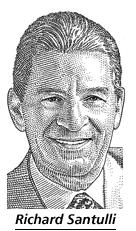 “Because people who buy companies usually have huge egos and think they’re smarter than the people they bought the company from, One of the nicest things about being part of Berkshire is that if I said to Warren, ‘I am going to go buy $1 billion worth of airplanes,’ he would say, ‘Why are you asking me? Go do it.’”
 “You have to love your business. You have to care about your people. You have to treat them with dignity and respect. And you have to communicate well with your people to let them know what is going on.”
Monday, September 25, 2006
The Warren Buffett CEO 9: Interview with an author, Robert P. Miles III
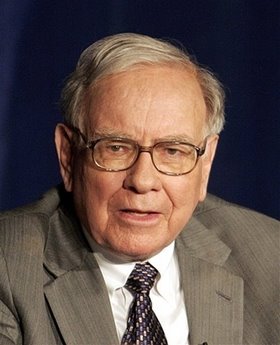 “Charlie Munger was right when he said that the top 25 managers at Berkshire could all die at once and Berkshire would continue successfully. Berkshire by its very culture and structure is deeper than any other conglomerate because it doesn't exist with just one CEO. Berkshire is a holding company of CEOs all operating independently of one another. Unlike every other traditional corporation, none of the CEOs has a term limit. All the Buffett CEOs have designated a successor.”
Saturday, September 23, 2006
The Warren Buffett CEO 8: Interview with an author, Robert P. Miles II
 “Since Warren Buffett has never lost a CEO to another competing enterprise, all the managers reported complete satisfaction with their deal and ongoing relationship.”
 “Warren asked that no interview transcripts be sent to him because he didn't want to influence the book in any way. No one asked for manuscript approval and no one asked for any changes in the book.”
Friday, September 22, 2006
The Warren Buffett CEO 7: Interview with an author, Robert P. Miles I
Excerpts from an interview with Robert P. Miles:
“It's totally up to each manager. Few meet with him in person. Most phone every few weeks if they need advice or want to report in. After the purchase of See's Candies, it was over 20 years before its CEO, Chuck Huggins, even visited Omaha.”
“….Bill Child of R.C. Willey Home Furnishings took a call from a dissatisfied customer right in the middle of our interview. He also lists his home phone on his business card. The Tatelman brothers of Jordan Furniture treat their employees like they are the customers. Executive Jet CEO Rich Santulli keeps his small corporate office near New York City while most of his employees and his operational center are in Columbus.”
Wednesday, September 13, 2006
Charlie Munger in Damn Right! 8
“First rate man should be willing to take at least some difficult jobs with a high chance of failure.”

“I’ve been in one aspect or another of investment management for what. 44 years or so, and trying not to disappoint anyone,” said Buffett. “And in the process of not disappointing anyone, one of the key factors is having them have the proper expectations and being knowledgeable about what they’re getting and what they’re not getting. Neither Mr. Munger nor I would function as effectively if we had tens of thousands of people who were in one way or another disappointed with us. That’s not Berkshire.”

“I’ve been in one aspect or another of investment management for what. 44 years or so, and trying not to disappoint anyone,” said Buffett. “And in the process of not disappointing anyone, one of the key factors is having them have the proper expectations and being knowledgeable about what they’re getting and what they’re not getting. Neither Mr. Munger nor I would function as effectively if we had tens of thousands of people who were in one way or another disappointed with us. That’s not Berkshire.”
Monday, September 11, 2006
Charlie Munger in Damn Right! 6
 “Charlie says as you get older you tolerate more and more in your old friends and less and less in your new friends.” – Warren Buffett
 Warren Buffett scolded investment bankers for providing whatever advice would bring them the most income: “Don’t ask you barber whether you need a haircut,” he wrote in Berkshire’s 1982 annual report.
Sunday, July 09, 2006
Berkshire's 40 Years Wisdom of Life 8: Diversification
 "If only one variable is key to a decision, and the variable has a 90% chance of going your way, the chance for a successful outcome is obviously 90%. But if ten independent variables need to break favorably for a successful result, and each has a 90% probability of success, the likelihood of having a winner is only 35%." -- Warren Buffett, Letter To Shareholders, Berkshire Hathaway Inc., 2004.
Note: Given the chance, will you bet for the of winning with probability of 0.9 or 0.35? Put all the eggs in a basket after you study throughly realiability of the basket is always better than distribute the eggs into 10 different baskets without making a throughly studies. The more baskets, the harder you hold the basket and care for the eggs inside. "Diversification is the protection against igrorance."
Saturday, July 08, 2006
Berkshire's 40 Years Wisdom of Life 7: Creative Accounting
"We prefer better profits to better cosmetics.
Over the years, a number of very smart people have learned the hard way that a long string of impressive numbers multiplied by a single zero always equals zero. That is not an equation whose effects I would like to experience personally, and I would like even less to be responsible for imposing its penalties upon others." -- Warren Buffett, Letter To Shareholders, Berkshire Hathaway Inc., 2005.


Over the years, a number of very smart people have learned the hard way that a long string of impressive numbers multiplied by a single zero always equals zero. That is not an equation whose effects I would like to experience personally, and I would like even less to be responsible for imposing its penalties upon others." -- Warren Buffett, Letter To Shareholders, Berkshire Hathaway Inc., 2005.

Friday, July 07, 2006
Berkshire's 40 Years Wisdom of Life 6: Newton 4th Law of Motion
 "Long ago, Sir Isaac Newton gave us three laws of motion, which were the work of genius. But Sir Isaac’s talents didn’t extend to investing: He lost a bundle in the South Sea Bubble, explaining later, “I can calculate the movement of the stars, but not the madness of men.” If he had not been traumatized by this loss, Sir Isaac might well have gone on to discover the Fourth Law of Motion: For investors as a whole, returns decrease as motion increases." -- Warren Buffett, Letter To Shareholders, Berkshire Hathaway Inc., 2005.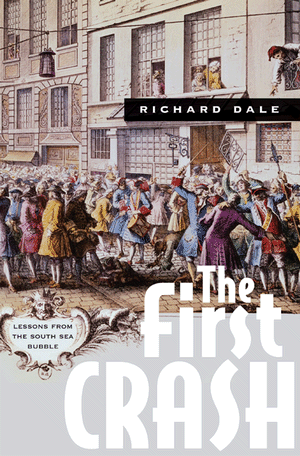
Note: Bank of England Museum, London is a place worth for visit if you wish to know more about the origin of South Sea Bubble.
Wednesday, July 05, 2006
Berkshire's 40 Years Wisdom of Life 5: CEO Pay
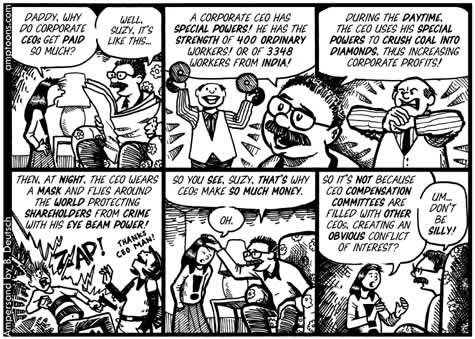
"Getting fired can produce a particularly bountiful payday for a CEO.
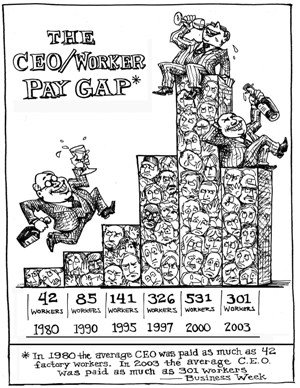 Indeed, he can “earn” more in that single day, while cleaning out his desk, than an American worker earns in a lifetime of cleaning toilets. Forget the old maxim about nothing succeeding like success: Today, in the executive suite, the all too-prevalent rule is that nothing succeeds like failure." -- Warren Buffett, Letter To Shareholders, Berkshire Hathaway Inc., 2005
Sunday, July 02, 2006
Berkshire's 40 Years Wisdom of Life 4
 "The attitude of our managers vividly contrasts with that of the young man who married a tycoon’s only child, a decidedly homely and dull lass. Relieved, the father called in his new son-in-law after the wedding and began to discuss the future:
“Son, you’re the boy I always wanted and never had. Here’s a stock certificate for 50% of the company. You’re my equal partner from now on.”
“Thanks, dad.”
“Now, what would you like to run? How about sales?”
“I’m afraid I couldn’t sell water to a man crawling in the Sahara.”
“Well then, how about heading human relations?”
“I really don’t care for people.”
“No problem, we have lots of other spots in the business. What would you like to do?”
“Actually, nothing appeals to me. Why don’t you just buy me out?”
(“Whose bread I eat, his song I sing.”)" -- Warren Buffett, Letter to Shareholders, Berkshire Hathaway Inc., 2005.
Friday, June 30, 2006
Berkshire's 40 Years Wisdom of Life 3
 "If a management makes bad decisions in order to hit short-term earnings targets, and consequently gets behind the eight-ball in terms of costs, customer satisfaction or brand strength, no amount of subsequent brilliance will overcome the damage that has been inflicted. Take a look at the dilemmas of managers in the auto and airline industries today as they struggle with the huge problems handed them by their predecessors. Charlie is fond of quoting Ben Franklin’s “An ounce of prevention is worth a pound of cure.” But sometimes no amount of cure will overcome the mistakes of the past." -- Warren Buffett, Letter to Shareholders, Berkshire Hathaway Inc., 2005.
Subscribe to:
Posts (Atom)