Friday, April 21, 2006

See You In London

United Kingdom and Europe are places with full of cultural heritage awaiting for someone to discover it. Though it's about cultural heritage, as an successful investor, we could not separate it from ourselves. The reason is simple: investment is all about business. And to be a successful businessman, we could not separate every tiny thing piece by piece, instead we should treat it as a whole. Likewise, in medical term, we can't treat human body piece by piece, ie: single finger, single leg, single eye, but we should treat our body as a whole body in order to sustain an overall long term health.

It's an opportunity for us to discover value investment in those countries. We would like to share it after the trip. We will return and share with you our discoveries after 20th May. See You In London....

"Be a Traveller, Not a Tourist."

Wednesday, April 19, 2006

Fund of Fund(s) (FOF)

Finally….after been in the market for quite of time in western world, especially US, it reaches to Malaysia, a relatively new market of fund management -- Fund of Fund(s). News clip of FOF, click here.

What’s Fund of Fund(s) (FOF) is all about? FOF is a fund invested its money into another mutual fund, in contrast to the conventional way, where mutual fund invests directly in equities, commodities, currencies, bond and so forth. When its conventional peers need to stretch their head to find out the best investment opportunities, FOF need not do so. What FOF needs to do is to find out the best mutual fund and invest on it.

What’s the benefits could investors gain from FOF? If we link a relationship between investment products (equities, commodities, currencies, real estate….etc) and investors similar to manufacturer and end user, then mutual fund (unit trust) role is like a retailer. When the products passing on from one level to another level, there is a cost of conducting business. That’s why mutual fund charges its investors sales load (5 – 6.5% of initial investment value), annual management fee (1.5% of NAV) and so forth. What happen if there is another level on top of retailer, ie: distributor? Put it an example, how much you pay for your airline ticket if you book directly from the internet compare to the one you buy from an airline agent?

Besides creating extra cost of business which is ultimately passing on to its end user, I see no value in the perspective of investors for creating another level. Of course, if you are a promoter or interested parties of these funds, there is another story.

Monday, April 17, 2006

Worldly Wisdom From Charles Munger III

“Occasionally, scaling down and intensifying gives you the big advantage. Bigger is not always better.

The great defect of scale, of course, which makes the game interesting-- so that the big people don't always win-- is that as you get big, you get the bureaucracy. And with the bureaucracy comes the territoriality-- which is again grounded in human nature.

And the incentives are perverse. For example, if you worked for AT&T in my day, it was a great bureaucracy. Who in the hell was really thinking about the shareholder or anything else? And in a bureaucracy, you think the work is done when it goes out of your in-basket into somebody else's in-basket. But, of course, it isn't. It's not done until AT&T delivers what it's supposed to deliver. So you get big, fat, dumb, unmotivated bureaucracies.

They also tend to become somewhat corrupt. In other words, if I've got a department and you've got a department and we kind of share power running this thing, there's sort of an unwritten rule: "If you won't bother me, I won't bother you and we're both happy." So you get layers of management and associated costs that nobody needs. Then, while people are justifying all these layers, it takes forever to get anything done. They're too slow to make decisions and nimbler people run circles around them.

The constant curse of scale is that it leads to big, dumb bureaucracy-- which, of course, reaches its highest and worst form in government where the incentives are really awful. That doesn't mean we don't need governments-- because we do. But it's a terrible problem to get big bureaucracies to behave.

So people go to stratagems. They create little decentralized units and fancy motivation and training programs. For example, for a big company, General Electric has fought bureaucracy with amazing skill. But that's because they have a combination of a genius and a fanatic running it. And they put him in young enough so he gets a long run. Of course, that's Jack Welch."

Sunday, April 16, 2006

Worldly Wisdom From Charles Munger II


“So you have to figure out what your own aptitudes are. If you play games where other people have the aptitudes and you don't, you're going to lose. And that's as close to certain as any prediction that you can make. You have to figure out where you've got an edge. And you've got to play within your own circle of competence.”

“To the man with a hammer, every problem looks like a nail."

Thursday, April 13, 2006

Worldly Wisdom From Charles Munger I

This is a link of the speech of Charles T. Munger, Vice Chairman of Berkshire Hathaway Inc. to his audience in USC Business School in 1994.

The speech is quite long though it's an essence of a brilliant man equipped with multi-disciplinary knowledge.

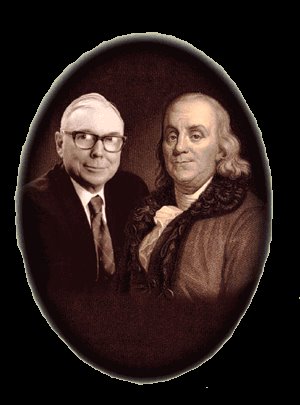
Charles T. Munger often quoted as incarnation of Benjamin Franklin, one of the very few brilliant man equipped with multi-disciplinary knowledge as well.

Some excerpts from the speech:

“Just the way if you want to become a golfer, you can't use the natural swing that broad evolution gave you. You have to learn-- to have a certain grip and swing in a different way to realize your full potential as a golfer.”

“If you always tell people why, they'll understand it better, they'll consider it more important, and they'll be more likely to comply. Even if they don't understand your reason, they'll be more likely to comply.”

Wednesday, April 12, 2006

Capital Guaranteed Fund II

In Malaysia, typically fund will charge 5- 6.5% of fund’s Net Asset Value (NAV) as sales load. That means $100 you invested, only $95 - $93.5 is invested for you by fund managers. The remaining $5 - $6.5 is paid to their sales force and admin fee. Thus, by investing in the fund with same amount compared to the one, John who does it by his own, to achieve same result after a year, say 10% return of $100 investment, you need not 10% return but roughly 16% return! Table illustrates the scenario:

John $100 $110 10% annual return
You $95 $110 16% annual return

It likes a 100m race where John starts at 0m but you start at -5m and assuming both of you have similar accelerating power, who will be the winner is no doubt in question.

Second part of income generated for fund management is through management fee. In Malaysia, typical rate is 1.5% NAV per annum. Putting DUT Fund as an example, with RM 300 million at the beginning of the year, assuming there is 0% return at the end of the year, its NAV will be RM 285 million (RM 300 million – (RM 300 million * 5%)). Thus, its first year management fee would be RM 4.275 million. What’s the management fee for the remaining 2 years? RM 4.21 million and RM 4.15 million. Total management fee for entire 3 years is RM 12.64 million. Good business, isn’t it? At least for the fund management. What’s investors get after 3 years maturity? From RM 300 million at the beginning of the fund launching, investors left with RM 272.36 million (RM 300 million – RM 12.64 million – RM 15 million).

You will wonder why investors left with RM 272.36 million while at the same time, the fund is guaranteed for its capital of RM 300 million? That’s the difference occurs when we are talking about PRESENT VALUE and FUTURE VALUE.


To find out PRESENT VALUE and FUTURE VALUE, click a link below:
Financial Calculator

Tuesday, April 11, 2006

Capital Guaranteed Fund I

“Where there is a demand, there is a supply.”

Capital Guaranteed Fund was once a selling like a hot cake product in western world. Its popularity became less when investors there found out that its performance was not so impressive as they expected. The smart promoters shift their target to another part of world: wealthy Asian, but less educated compared to their western counterparts.

Since 97/98 Great Asian Financial Crisis, investors in Asian countries become a man after shock: any investment tagged with “Capital Guaranteed, Zero Risk” will receive a warm welcome from these investors. While for every prudent and rational investment should first preserve capital and then only look for capital appreciation, the fund promoting “Capital Guaranteed, Zero Risk” is another story.

Recently, quite of number of funds pop up with tagged of “Capital Guaranteed, Zero Risk” in Malaysia to lure investors. Let’s look at how 1 of the fund structures its “Capital Guaranteed, Zero Risk” product.

NTD launched its RM 300 million DUT Fund. The fund is an offshore fund with capital guaranteed feature. Investors who buy DUT Fund must starts with initial investment of RM 5,000. The fund is for 3 years maturity, where the capital is guaranteed after 3 years period while at the same time, POTENTIALLY GAIN from any capital appreciation. 85-90% of the investment would be placed with a negotiable investment deposit to ensure capital return guarantee and invest the remainder in 5 regional indices, namely, South Korea, Japan, Australia, Taiwan and China. To entice investors, the promoters show their back-test that over past 3 years, these indices appreciated at the rate of 34% per annum. Without deep thinking, everything seems great, isn’t it?

Saturday, April 08, 2006

Are You Domino Pizza? III

With the “Power of Leveraging”, Peter is glad that he only used $100 as an up front payment 15 years back and today it appreciates to $5000 ($250*20 toys). He predicts his net worth will be $12,500 for another 15 years when he finishes all the installments. Remember besides $100 up front payment, he needs to touch up $7.51 every month to serve the installment even he receives $5 rental every month. Thus, his total investment would be $100 + $7.51*12 months*30 years, which is $2803.60.
For the sake of easy calculation, we omit several factors such as Peter might lose out his rental for certain period because people who rent Mickey Mouse come and go. When this happens, it generates another costs which eat up his total return because in the process of searching for new people to rent the toy, it involves several costs such as broker fee, admin fee….etc to secure the tenant. The higher turnover rate, the more costs he needs to bear. Furthermore, 30 years is a long period. From time to time, Peter got to pay some maintenance fee to maintain toys usage life. Insurance charge, local council assessment fee and so forth are other hidden costs.

People might argue that the rental could be raised from time to time. True, but its increment would depend on the demand. When the demand is weak, not only Peter cannot raise its rental but he might lower the rental in order to attract the tenant. If not doing so, he needs to find ways to earn more in order to serve the installments. The monthly installments are sure thing while the rental from tenants is depends to the market condition.

While leveraging sometimes is needed in doing business as well as investment, it must be deal with EXTRA CARE. It’s like a knife: if use it wisely, it helps you a lot; if you use it without care, it can hurt or even kill you. It’s true that for majority of us, it’s impossible to purchase real estate for cash and we need to leverage with housing loan. The advice is for those who dreams for becoming rich in the shortest time by OVER LEVERAGING. He may buy 2, 3, 5, 10 or even 20 real estates with the money he has for 1 real estate. This type of “investment” is not a prudent and rational investment. Think of it: along the expressway where the maximum limit is 110km/h, will you drive until 120, 130, 150 or even 200km/h? How about if you are driving during heavy rain night time? People who drive exceed the limit in such conditions know well about the risks but for some reasons, they ignore it. If the journey is short, he might lucky enough to reach his destination. Life is a long journey. It’s never a 100m race but marathon. People who “run out of time” to over leveraging in real estate or any investments will only have 1 outcome: FAIL. When you can choose to drive safely with 90, 100 or 110km/h during sunny day, why choose to drive over 110km/h at night with heavy rain?

Remember the story of camel loaded with full load? When 1 little straw put on it, it collapses. When you over stretching your financial, only 1 small occurrence could fail you entirely. Domino Effect is devastating.

Are You Domino Pizza?

Corrections on Are You Domino Pizza? II

Please take note that the monthly installment served by Peter is $12.51 instead of $6.26. At the same time, he got to find ways to earn more money in order to touch up the difference of $7.51 instead of $1.26 every month.

We apologize for the mistakes.

Previous article of Are You Domino Pizza II?

Thursday, April 06, 2006

What will you choose? Less is more? or More is less?


Option A: Save $1,380 every month for entire 30 years, non-stop, with interest rate of 4.5% per annum.

Option B: Outlay $10,000 at the beginning and no more contribution for the entire 30 years period, with interest rate of 17% per annum.

In both cases, dividend earned would be reinvested. No withdrawal until the end of 30 years period.

What option will you choose if you are looking for your retirement plan?

Ken who opts for Option A needs to save $496,800 ($1,380*12*30) for 30 years. Put it an example, if his monthly salary is $6,000, he needs to allocate 23% of his salary for this contribution. While for John who opts for Option B needs only lay out $10,000 at the beginning and no single cents need to be contributed after this. This means with same salary, John enjoys whole $6,000 he earned every month for his quality life. At the same time, Ken can only have $4,620 for same purpose.

The outcome?

Ken: $1,055,739.54
John: $1,110,647.00


Technorati Tags: , ,

Tuesday, April 04, 2006

Are You Domino Pizza? II

Peter with the most toys proclaimed himself as the richest among his peers because he possess 20 toys compared to Helen, 10 toys, Lisa, 5 toys and so forth. Best of all, Peter received $5 every month for the rental (20 toys * 25 cents). Everyone admires of his brilliant “investment”. This is what appears in front of the public. On the other hand, $5 rental Peter receives not all goes into his pocket. He needs to pay back the installments plus interest to his financier, Tom. As the contract signed between them, there will be 360 monthly installments to be served by Peter where the interest rate fixed at 6.9% per annum, the up front payment is $100. There is no admin fee and other charges imposed. The monthly installment that Peter needs to serve is $6.26. OOOOpssssssss……..how to serve $6.26 when Peter only receives $5 rental per month? He got to find ways to earn extra in order to touch up the difference of $1.26 every month. At the same time, he reassures himself that the “investment” is a good investment because the limited edition Mickey Mouse price will only goes north because of its scarcity. While it is painful to serve the installment over 30 years period, it is still worth because after the period, he will own 20 limited edition toys which will worth more by then. This is his belief and he puts his faith on it.

30 years is a long period, you never know what will happen in between the period. Something good or bad might happens along the way. True, limited edition Mickey Mouse soars its price from $100 (when Peter first bought it) to $250 after 15 years. Peter is so happy that he made a smart choice because his “investment” appreciates more than double in 15 years. He predicts that the same trend will continue for the next 15 years, that’s when he finishes serving all the installments. At that time, he assumes the price of the toys will be $625 ($250 + ($250*150%)). With 20 toys on hand, he net worth will be $12,500 by then.

Technorati Tags: , ,

Monday, April 03, 2006

Are You Domino Pizza? I

It’s a story telling time:

John has $100. With this money, he could buy 1 limited edition Mickey Mouse toy. This is a straight forward business: you buy from the seller with the money you have, nothing special. Since the objective of the seller, Harry is to sell buyer more, so he could earn more, he stretch his head day and night to find out a way to increase his sales. One day, he pops up with a great idea: by installment payment scheme, sure the sales could be increase since it creates an illusion to the buyer that his affordability is increase. On the next day, he promotes his idea to his buyer, Ken that by only laying $100, he could get 2 limited edition Mickey Mouse toys instead of 1. Enticed by this temptation and without hesitate, Ken buys 2 toys with the same amount as John did yesterday. But, how Harry could sell 2 toys with the total price of $200 by only accepting $100 from Ken? It’s an arrangement Harry made for Ken with Tom, who is a financier of the deal. Of course, in business, every cent counts. In order to finance Ken, Ken has to repay back $100 plus interest charge.

Since the scheme gets an overwhelming response from the buyers, Harry promotes similar scheme to his buyers: with less money, you could get more. Besides that, he also promotes another scheme: the buyers who willing to rent out their toys will be paid and this is known as rental. The rental paid would be 25 cents per month. Due to this attraction, Lisa buys 5 toys, Helen 10 toys, Peter 20 toys, all with same amount: $100. Best of all, every buyers could rent out their toys to receive rental. Everyone gets what he/she wants, everyone happy. It seems in a happy ending NeverLand.

Technorati Tags: ,

Sunday, April 02, 2006

Manager Compensation

It’s how amaze a lousy, underperforming company gives their managers (cum director most of the time in some companies) a handsome paid plus huge bonuses. As far as I could understand, the objective of giving out bonuses is when a company performs an above average result compared to its peer. I am puzzle what’s the goal of giving out this huge bonuses if the manager does not perform. I also wonder is it a company corporate culture where the managers receiving handsome paid no matter how’s the company he manages perform, being it good or bad. If this is a case, I would not hesitate to run far away from the company, not mention to be its investor.

Let’s examine paid received by top management of Wesco Financial Corporation, including Chairman, President and CEO who is Charles T. Munger

1) Jeffrey L.Jacobson Salary Bonus
Vice President and
Chief Financial Officer
of Wesco and
MS Property Company
2003 186,000 -
2004 204,000 -
2005 210,000 -

2) Robert E.Sahm
Vice President of Wesco
and President of MS
Property Company
2003 188,400 16,100
2004 198,000 16,900
2005 207,900 17,750

3) Charles T. Munger
Chairman of the Board,
President and CEO of Wesco
2003 - -
2004 - -
2005 - -

Source: www.wescofinancial.com

The following graph compares the value at each subsequent year end of $100 invested in Wesco capital stock on December 31, 2000 with identical investments in the Standard and Poor’s (“S&P”) 500 Stock Index and the S&P Property-Casualty Insurance Index, assuming reinvestment of dividends.

Need me to say more? Compare the figures with the companies you invested....

Technorati Tags: , , , , , , , ,

Saturday, April 01, 2006

Woodpecker and Snake

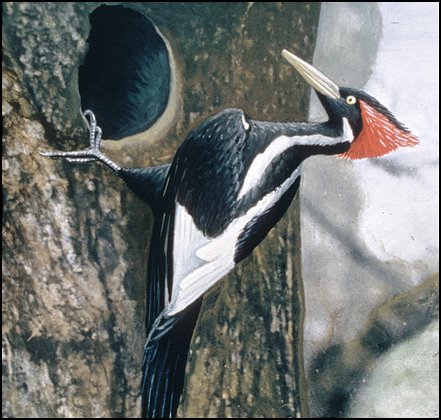
Woodpecker builds his nest above pines tree. You may wonder why pines tree but not other type of tree? There is a reason behind it. Snake is a predator of the woodpecker eggs and it seems it is easy for snake to climb the tree to catch the eggs. In order to protect his progeny, wood pecker must select a place where he can safeguard his progeny. Pines tree secret resin, which is an irritant to snake. Whenever snake tries to climb over tree to catch the eggs, he would end the up with a failure. This is because whenever snake climbs the tree, along the way, he would suffered from an irritation from the tree resin. Because of the irritation, the snake will fall down from the tree half way before he manages to catch the eggs. That’s the smart way of woodpecker to protect his progeny.

In the investment world, the naïve investors are similar to the greedy snake. Whenever there appears an “Once in a life time opportunity”, they will flooded to it. The promoters of the “opportunity” definitely will tell the investors how lucrative the investment and best of it, it appears “Zero Risk, Capital Guaranteed”. In order to lure the investors, they will equipped with big titles such as managed by world renowned fund managers, backed with hundred years history banks and so forth. Because the titles are so big and glamour, the investors entrust their money and invest to the so called “Zero Risk, Capital Guaranteed” investment.
Keep in mind that the hundred years history bank does not equivalent to hundred years of successful fund management. If you really look deeply, you will find out that the bank nowadays acts more like a financial supermarket: they sell you everything, from A to Z. Housing loan, business loan, credit cards, machinery leasing, mutual funds….etc. When you really examine their performance of the fund they promoted, it seems that majorities of them not only do not preserve the capital of the investors but deteriorate it. While the objective of the investment should always be first preserve the capital and second for capital appreciation, they deliver the opposite result. When asking why they deliver such poor result, they will blame to external factors such as high fuel cost, Tragedy 9-11, financial crisis and so forth. Seem that their poor performance is none of their business. True, those crisis and negative events happens all the times: in the past, present and for sure it will continue in the future though the theme might different, so are these fund managers telling you that the fund performance will continue perform poorly in the future? If so, why selling the funds promising the investors how good the potential return in the first place? Why they still enjoying handsome paid while fund continue perform poorly?

To be a snake or woodpecker is your choice. To be a snake looking for quick and easy profits is dangerous. After all, life is never easy. Life is not a story book, it is a reality.

Technorati Tags: , , , , , , , ,

Thursday, March 30, 2006

Sundew

Sundew is a carnivorous plant which can be found on every continent but Antarctica. Mucilage which is drops of sticky substance could be found on the leaves of the plant. The mucilage attracts the insect to the plant tip because of its dew-drop appearance. The insects get stuck in the mucilage and become entangled. The substance then digests the helpless insect. The tentacles on the leaf bend toward the captured insect in about an hour time

This phenomenon posses a close similarity in a human world. In the investment, there are many sundews awaiting for the naïve insects trapped into their trap. The sundew proclaims themselves are Buffett disciples and follow Value Investing principles in their investment portfolio. When insects believe on them and pour out their hard earned money to the so-called “Value Investing”, sooner or later, they will find out that the truth is not as sundew proclaimed – following Value Investing principles. The sundew who proclaims himself as Buffett disciple make an investment in an lousy company where there is no profits, bad business prospect, stressing on form over substance and practice funky-punky corporate exercises. The exercises could be a beverage company get involves in aquaculture business, poultry farming company get involves in telecommunication business….etc for the sake of diversification. (or should I say DIEversification?)

People who know partially but not all are the most susceptible insects exposed to the danger of sundew. They are intelligent but without or lack of proper knowledge. Remember that intelligent does not equivalent to knowledgeable. Sir Isaac Newton is a highly intelligent person but still he falls in prey of South Sea mania which cost him a lot. People who know Warren Buffett is the world 2nd richest man in the world and his fortune is derived through investment admire of his fortune and look forward to follow his step. But, they might not even know HOW he invests. As long as there is a talk with a tag of “Warren Buffett”, “Value Investing”….etc, they would lure to it. The talk might be free of charge and even provide with food and beverages with some free goodies such as pen, umbrella and so forth. When the talk starts, it might begin with Buffettology investment principles. When they proceed further, their real motive revealed: with the help of their powerful software, it helps you to make “Value Investing”. Of course, they will show you with the help of the software, it achieves 100, 200 or even 500% return. The is no brainer logic of it: with over 1000 or even 10000 equities listed in the exchange, for sure there will be 1,2 or even 10 equities with the superb performance in short term. Whether the high growth rate could be sustained is another problem. But, they are smart enough to show you only the best of one or two while at the same time hundred or even thousand out there which perform poorly will not be shown. Since they show you with the superb result, you will enticed to purchase the “powerful” software and subscribe their service which always cost you not a dime. Who earns the most? Whether you could really earn from the investment is another story – money first dropped into the pocket of the software / talk promoters.

“What Wall Street gives with one hand, it usually takes away with the other.” How true of this. It applies not only in Wall Street as well as Main Street.

Technorati Tags: , , , , , , , , ,

Monday, March 27, 2006

Is Mutual Fund a Good Investment? III

Mutual fund promoters always highline the fund is managed by professionals. The first impression you get when you talk about professionals is they are truly professional, meaning that they are devoted their time for the fund management as well as they are equipped with necessary knowledge and skills. This should at least beat down average Joe result in the investment. But, the impression we get not always represent true reality. Checking back to the history and you found out that they are so many fund managers who do not perform, not even by laymen in the street. The reasons? There are too many and I just want to highlight few.

1) Peer pressure
There are 4 variables for the investment results and its outcomes:
i) You are right, others are right: that’s great! You deliver the results as expected.
ii) You are right, others are wrong: that’s even superb! You are among the top of the tops who delivers superior results.
iii) You are wrong, others are wrong: hmmm….. because of unforeseen circumstances such as 9-11 Tragedy, Hurricane Katrina, Tsunami…etc that could not be avoided, thus, delivering the poor results. Since everyone delivers same poor results, no one will blame you.
iv) You are wrong BUT others are right: oooooops…. That’s disastrous. Why you deliver such poor performance while others could deliver a handsome return? Everyone pinpoint at you and you are no way to hide because figures show everything. How? How do you avoid such phenomenon?

If you are the fund manager, which one would be preferred and which one you try to avoid far away? Since the management fee is not based on performance merit, isn’t it PLAY SAFE a better idea? If I could deliver a handsome results, that’s the desired outcome. But, if to deliver such results posses a risk of delivering a poor result compared to others who don’t, I’m better protecting my position first. After all, management fee is sure thing while to be a super star might risk me losing out my rice bowl!

2) Ego
Many fund managers are graduated from Ivy League. They are full of titles and they might be a Nobel Prize winner as well. Take an example, 2 Nobel Prize winning economists with other elite academic traders manage Long Term Capital Management (LTCM). Even with so many highly educated and intelligent people, the fund still failed. As mentioned by Warren Buffett, to ensure a successful investment result, you do not need a rocket scientist, but a Grade 6 mathematics with a rational business thinking.

Next time, whenever mutual fund salesmen try to persuade you to buy from him, ask him about Sales Load, Management Fee, Trustee Fee and so forth and their impact to your investment result. Are they care about the impact? How about their net worth? Are their majority net worth placed where they promote? If not, then why? All in all, is up to you – what’s your objective of your investment in mutual fund? To please somebody, buy it because of relationships, such as family members, friends or colleagues? Or because you really look for the one who could preserve your asset as well as creating value for you? After all, it’s your money and it’s your responsibility to take care of it, if not you, who else?

Be a man. Place your money where’s your mouth is.” This is what I want to share with all fund managers….

Technorati Tags: , , , , , , , , , , , , , , , , ,


Sunday, March 26, 2006

Is Mutual Fund a Good Investment? II

People tend to think that their investment made in mutual fund is 100% of their money invested. This assumption is totally out of the reality. In real life, what you invest is lesser than the money you pour out. This means when you invest $10,000 in SDF fund, the money managed by fund manager for the investment purpose is not $10,000 but lesser. You would be amaze and ask if it is not $10,000 then how much is really for investment purpose?
People invest in mutual fund should be aware there are 2 different prices, ie: selling price and buying price similar to currencies exchange rate. The selling price of the fund is ALWAYS HIGHER than buying price. For example, selling price is $1 while buying price is $0.935. What is this means? That means fund management sold you the fund for $1/unit and if you decide to sell it back to them (providing there is no fluctuation of the prices), you only get back $0.935. Say, if you bought the fund for $10,000, then you will only get back $9,350. Where is the remaining $650? Evaporate in the air or taken by the Martians? Nope, that is the cost paid to the pretty or handsome guys who persuade you to invest in his fund, the fancy sales booth….etc. The difference of the prices is called Sales Load.

What’s the impact of Sales Load and management fee (note: mutual fund normally incurs 1.5% of NAV as yearly management fee) to your investment in the long run? It’s huge! Let me show you the example. There are 2 investors, namely, John and Tom. John invested his money amounting $10,000 in SDF mutual fund while Tom invested his money, same amount as John directly to equity market. Assuming both investments bring them same return rate, ie: 12% per annum. What’s the end result after 10, 20 or even 40 years?

Year 0 Year 10 Year 20 Year 30 Year 40
John: $10,000 $24,966 $66,665 $178,008 $475,315
Tom: $10,000 $31,059 $96,463 $299,599 $930,510

As from the table shown, the difference of investment result for John and Tom in term of percentage after 10, 20, 30 and 40 years are 24.41%, 44.70%, 68.31% and 95.77%. This means, although the return rate for both are same, ie:12% per annum but after deducting hidden cost by mutual fund, it brings a disastrous result to its investors. As you notice, the difference could be as huge as double after 40 years!

Please bear in mind that the calculation is based on consistent 12% per annum return rate. The difference could be further if in particular years, there are negative return rate. Remember that, mutual fund management fee is Asset Based Commission (ABC), which means no matter how’s the performance of the fund, 1.5% of the ENTIRE NET ASSET VALUE will still deducted from the fund. What do you think about your fund manager performance? Do you believe they are so superior that they could register consistent high, positive return rate for you in the long run, ie: 40 years? Or is it makes sense that they somehow might make some mistakes and bring negative return to the fund? How about switching from SDF fund to ASD fund, you might ask. It is truth that this is what people normally act if one fund does not perform, they will switch to another fund. My answer? Unless you are sure the fund you switch to is by high probability they are superior than others, otherwise, don’t do it. The reason? SALES LOAD.

Technorati Tags: , , , , , , , ,

Saturday, March 25, 2006

Is Mutual Fund a Good Investment? I

Before we jump into a conclusion, we should examine how’s Mutual Fund (known as Unit Trust in English Commonwealth countries) works.

Promoters and salesmen for the mutual funds are very friendly, some even hire only pretty ladies or handsome guys to lure the investors. This is not a bad thing since every one likes beautiful things and people. Everyone likes to be pleased. Remember when you shop in the jewelry shop, whatever you choose, you will be praised by the salesmen that your taste is very unique – that gives you an impression that you are the only one in the world, you are superior. Because of the feeling, it is naturally that you would pour out money to buy the jewelry. Whether the praise mentioned by the salesmen is truth or not is not important. After all, what lies in the salesmen mind is to sell you out the jewelry and earn the commission.

Business is business and for sure there is no free lunch in this world. Everything incurs cost. By setting up a fancy sales booth, hiring friendly yet pretty sales people, or even drives directly to your house or office to promote his funds all incurs cost, being it directly or indirectly. People naïvely think that it does not cost him single cent are doomed to be manipulated. While it is legal and makes sense that business needs to earn in order to sustain its operation, it is VITALLY important that the place you invest should at least protect your asset value for the first place and then enhancing its value for the later part. If the investment you made could not meet its first role of protecting its value, not mentioning of enhancing its value, it is worthwhile thinking of whether you make a sound investment or not. The case is worse if the investment you made not only does not protect its original value but bring you a negative value.

The problem lies in the mutual fund industry is its management fee is based on Asset Based Commission (ABC). That means no matter what’s the performance of the fund, being it good or bad, it will deduct 1.5% of the ENTIRE NET ASSET VALUE (NAV) of the fund. Put it an example, say Fund JKL NAV is $1 billion. Thus, at the end of the year, the fund manager will deduct 1.5% of NAV, that’s $15 million from the fund as management fee. Whether the fund performance is positive or negative is not the prime consideration. It is no wonder fund managers are looking for the biggest fund – the bigger the fund, the more they earn. This problem happens in almost every industry where the managers manage Others People Money (OPM) and this scenario is known as Owner-Agency Conflict.

How to prevent us from falling prey into this Owner-Agency Conflict? First of all, ask yourself what’s the objective of the investment you made? To please someone? Cannot resist because of pretty ladies or handsome guys persuasion? Or to create value to your asset? If the answer is the latter, then you need to choose carefully your fund manager. He should be the one whose his management fee should be Performance Based Commission (PBC) rather than Asset Based Commission (ABC). If his performance is poor, there is no reason he still receiving a handsome pay check. On the other hand, if he delivers, we should share some of our profits with him. Doesn’t it fairer?

Technorati Tags: , , , , , , , ,

Friday, March 24, 2006

Blue Chips or Potato Chips?

Often, when we invest in equities, people told to invest in Blue Chips for the sake of stability. The Blue Chips normally stand for the companies who are the market leader in their industry. For example, General Motor (GM) in car industry, Dell in computer, Microsoft in software industry, Wal-Mart in retailing and so forth. Are the Blue Chips really a good investment? Why not we examine some to get some ideas?

Google, the world top leading search engine as per 23rd March 2006 has market capitalization of $101.04 billion ($341.89/share). Its Price Earnings (PE) stands at 68.09 with Earnings Per Share (EPS) at $5.02. No dividend paid out so far.

What does it mean? With PE of 68.09, it means when you invest in Google at the current price, you need to wait for 68.09 years to get back all the dollars you invested. The inflationary factor not calculated on this matter. Say, you invest a share of Google with $341.89 in 2006, you need to wait until 2074 to get back $341.89. Please note the value of $341.89 in 2074 is TOTALLY DIFFERENCE with the value in 2006. Of course your invest return period could be shorten if there are some positive progress. For example, for the coming years, Google earns spectacular earnings years after years which mean its EPS more than $5.02. It might be $10, $30, $75 or even $300! Who knows? One things for sure is high growth normally will not long last. It could grew at the rate of 20%, 40%, 80% or even 200% per year. But, to continue such high growth rate for 10 years, 20 years or 50 years, there is only one route: OUT OF THE PLANET EARTH.

Baidu, Chinese top search engine saw its price drop since its 1st day closing price at $122.54. As per 23rd March 2006, its price stands at $50.60. Is it a bargain since its price drops more than half of its peak? To answer the question, let’s look at its fundamentals. Its PE is 273.51 with EPS $0.19. No Dividend paid out before. Even tough its price drops more than half from its peak, its PE seems at the sky rocket end with only tiny earnings. Is it a good investment choice? Ask to the RIGHT candidate – RATIONALITY.

VA Linux, once a darling star of the dot com mania who is tagged as “Next Microsoft” peaked at $320. The price quoted in 23rd March 2006? $3.65. The lost of almost 99% of its value. Enhancing shareholders value? Yes, it is but with reverse direction. At 3.65, its PE stands at 32.88 and EPS of $0.11. No dividend ever paid out.

Wal-Mart Stores listed in New York Stock Exchange (NYSE) since 1970 is the world top retailer. It outpaces its rival such as French Carrefour, UK based Tesco and German Metro. Its price on 23rd March 2006 was $48.54. Its PE stands at 18.10 and EPS at $2.68. Its dividend paid out translates to 1.40% yield.

How about a legendary “Oracle of Omaha”, Warren Buffett’s holding company, Berkshire Hathaway Inc.? Its price as in 23rd March 2006 was $90,000. Yes, $90,000 per share! Its fundamental? PE at 16.25 and EPS of $5,538.47! There is no dividend paid out since its listing. (Note: the price quoted here is Class A share. There are 2 classes of Berkshire’s share: Class A and Class B where the price of latter is 1/30 of the former.)
Though the examples, I believe RATIONAL investment judgment could be made. After all, what we need for our investment portfolio is the REAL blue chips which are always there but not the potato chips which its destiny to be eaten up.

Technorati Tags: , , , , , , , , , , , , , , ,

IPO Stars


Google's share pirce quoted in NASDAQ since listed.


VA Linux price quoted in NASDAQ since listed.


Baidu price quoted since listed in NASDAQ.

Technorati Tags: , , , , , , , ,